Preparing Atlas Biotech for its next chapter

Preparing Atlas Biotech for the next chapter

— Brand Narrative

— Scientific Visualization

— Website Design and Build

— Investor Comms

Atlas Biotech is building functional genomics tools to de-risk oncology drug discovery. Their core technology predicts how genetic mutations drive drug response, giving pharma partners quantitative data where the industry has relied on guesswork.

Through the Radian Grant, we partnered with Atlas to translate rigorous science into a clear public narrative and investor-ready digital presence.

— Brand Narrative

— Scientific Visualization

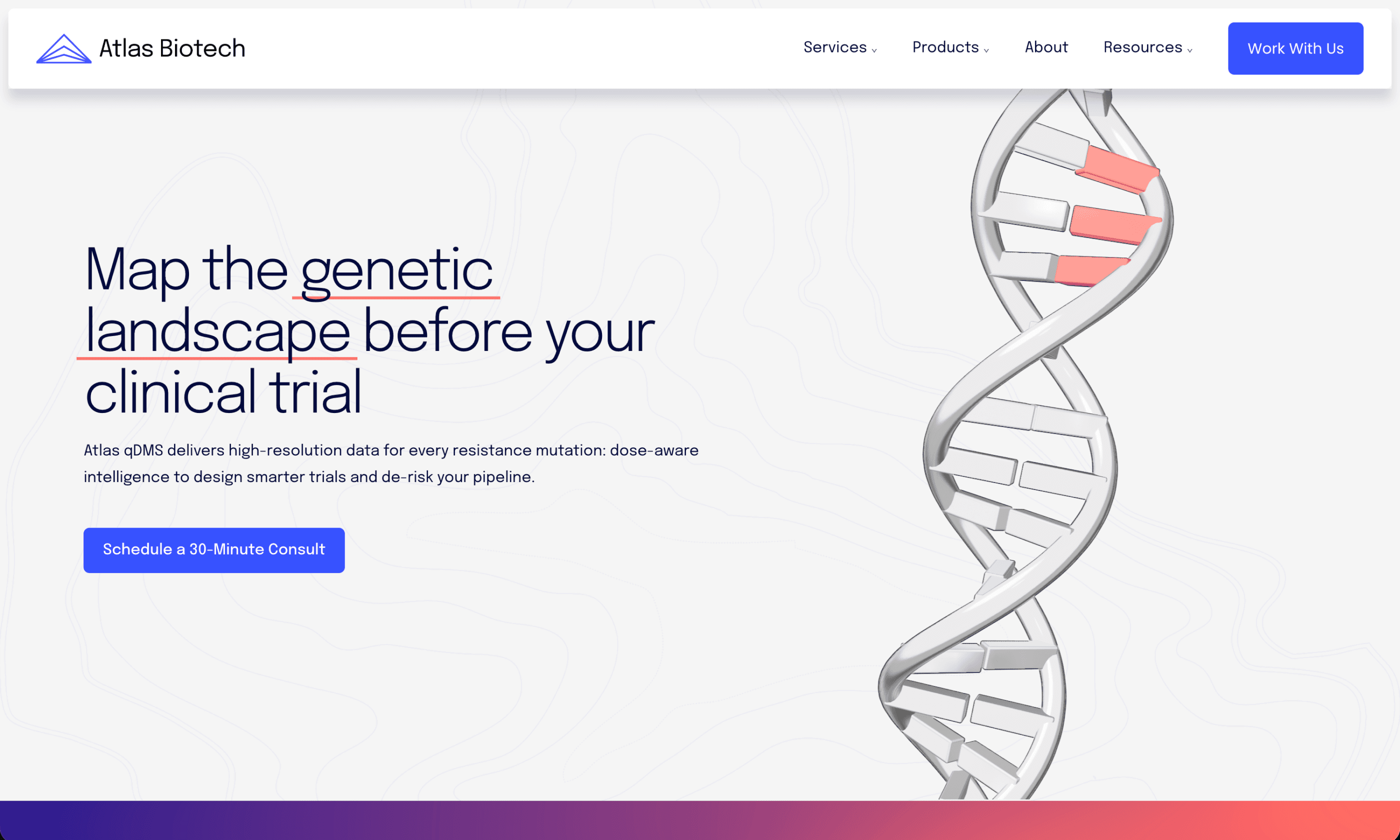
— Website Design and Build

— Investor Comms

Overview

Atlas Biotech is building functional genomics tools to de-risk oncology drug discovery. Their core technology predicts how genetic mutations drive drug response, giving pharma partners quantitative data where the industry has relied on guesswork.

Through the Radian Grant, we partnered with Atlas to translate rigorous science into a clear public narrative and investor-ready digital presence.

Overview

Atlas Biotech is building functional genomics tools to de-risk oncology drug discovery. Their core technology predicts how genetic mutations drive drug response, giving pharma partners quantitative data where the industry has relied on guesswork.

Through the Radian Grant, we partnered with Atlas to translate rigorous science into a clear public narrative and investor-ready digital presence.

The Starting Point

95% of oncology drugs fail in clinical trials

Billions lost. Patients on treatments that won’t work. The gap is prediction: pharma companies cannot reliably anticipate how a patient’s genetic mutations will affect drug response.

Josh Reynolds started Atlas to close that gap. Atlas’s core technology, quantitative deep mutational scanning (QDMS), maps every possible mutation in a drug target and measures how each one affects treatment efficacy.

Old logo

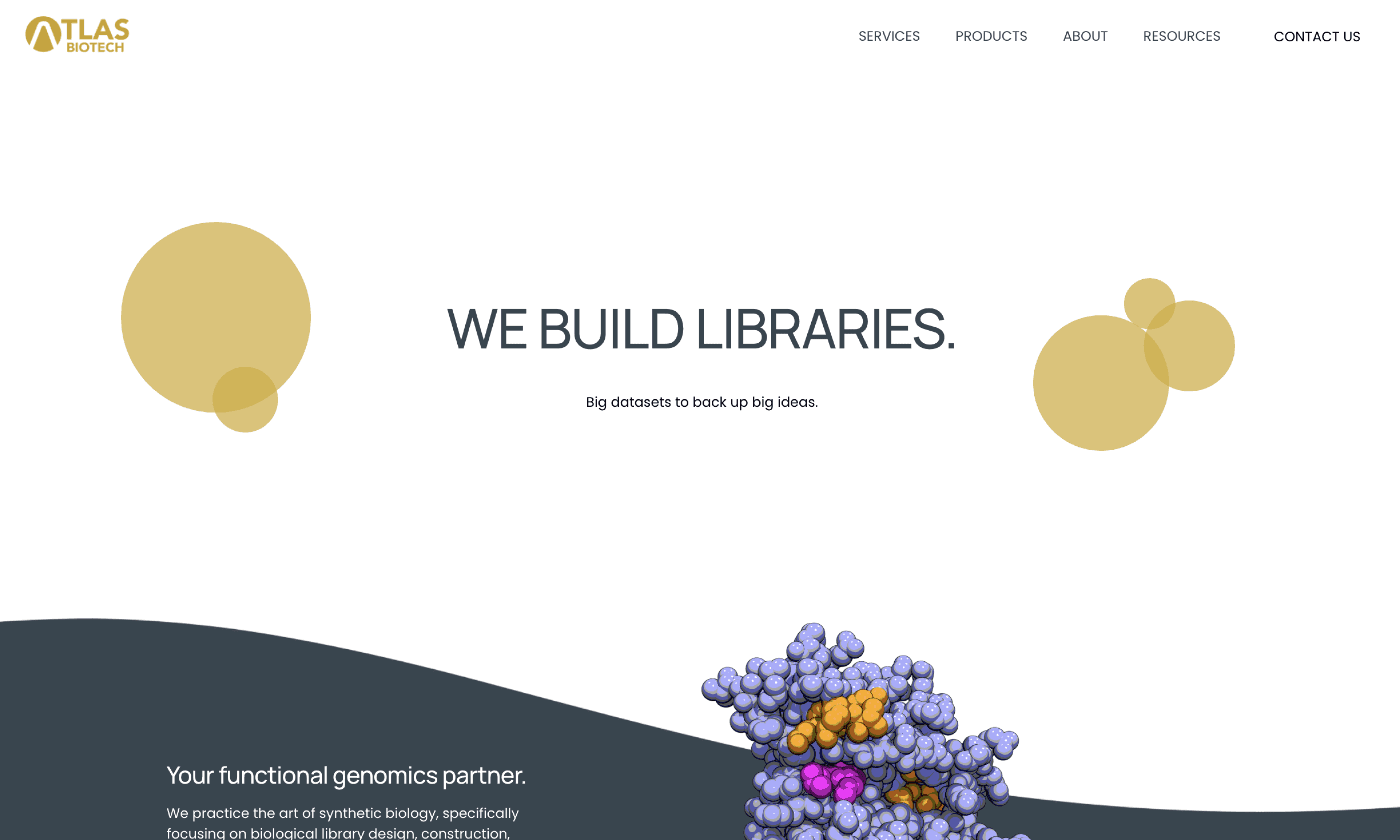
Old website

The Starting Point

The difference: existing approaches tell you if a drug works in a dish. Atlas tells you if it will work in a patient.

The science was working. But outside of a Zoom call with Josh walking someone through a slide deck, there was no way to know that.

Billions lost. Patients on treatments that won’t work. The gap is prediction: pharma companies cannot reliably anticipate how a patient’s genetic mutations will affect drug response.

Josh Reynolds started Atlas to close that gap. He defended his PhD at Penn State and launched from an incubator space in State College, PA, building out a lab with equipment sourced from eBay.

Within a year: a $2.4M NCI grant, five full-time hires, and real client conversations.

Atlas’s core technology, quantitative deep mutational scanning (QDMS), maps every possible mutation in a drug target and measures how each one affects treatment efficacy. Not qualitatively. Quantitatively.

>98% sensitivity

at clinically relevant doses

>97% specificity

at clinically relevant doses

95% of oncology drugs fail in clinical trials

What emerged was a thesis: Atlas predicts how genetic mutations drive drug response. Everything else in the narrative organizes around that.

A Series B biotech reached out wanting to discuss deep mutational scanning. Josh scrambled to build a capabilities deck overnight. That kept happening. The science was ahead of the story.

Finding the Narrative

The first challenge wasn’t design. It was comprehension.

Functional genomics is dense. Mutation profiling, drug sensitivity screening, predictive pharmacology. Each one requires real scientific literacy. Connecting them into a single platform requires translation.

We spent the early phase learning the science alongside Josh and his team. Not to simplify it. To find the single clearest path through it.

person's right eye

“Radian helped us translate complex functional genomics science into a story that investors can immediately understand without losing technical rigor. It’s changed how confidently we present the company to partners and funders.”

Josh Reynolds, PhD

Founder & CEO

Finding the Narrative

The first challenge wasn’t design. It was comprehension.

Functional genomics is dense. Mutation profiling, drug sensitivity screening, predictive pharmacology. Each one requires real scientific literacy. Connecting them into a single platform requires translation.

We spent the early phase learning the science alongside Josh and his team. Not to simplify it. To find the single clearest path through it.

Building a New Brand Vision

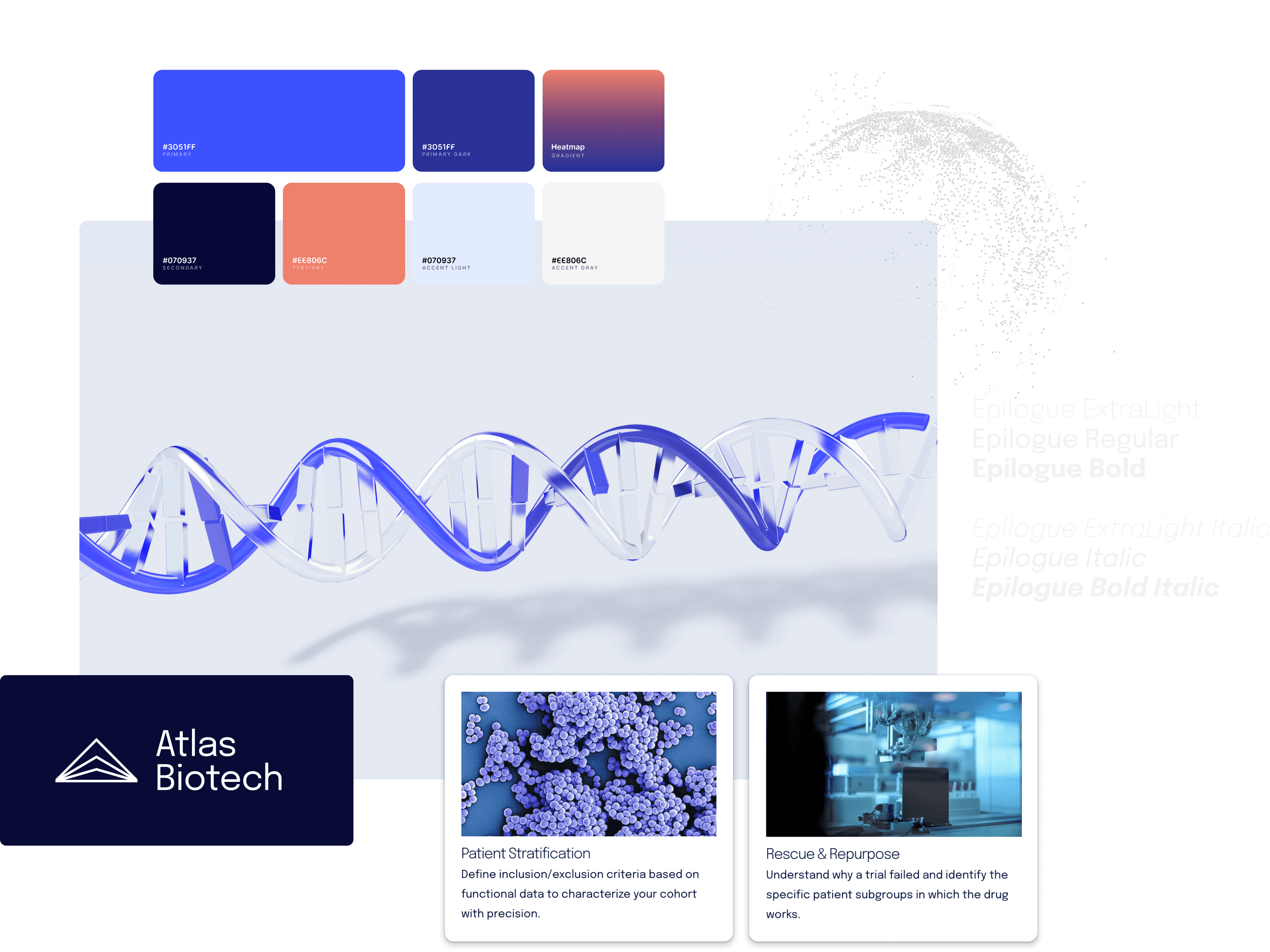
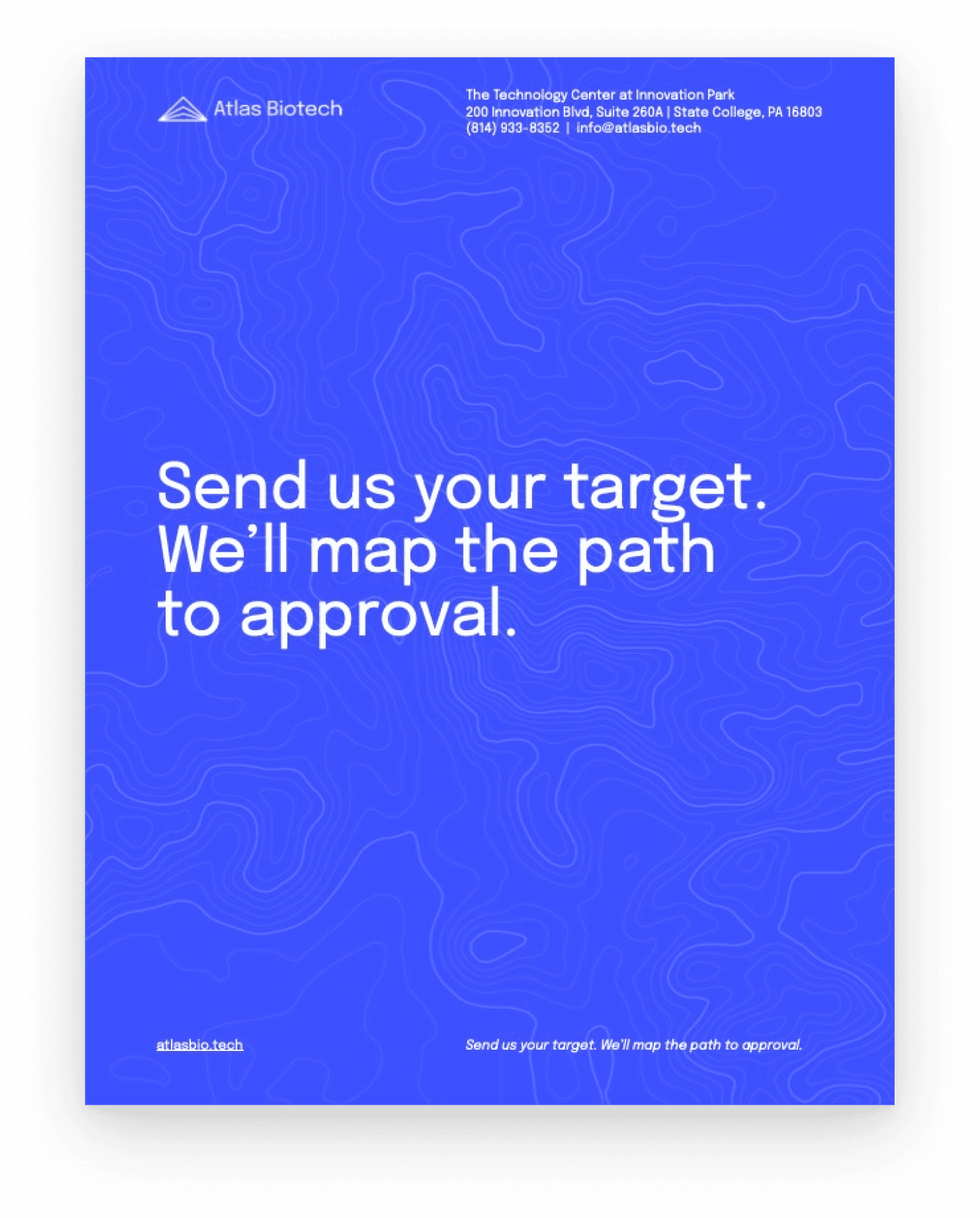
We explored three directions: organic and vibrant, dark and geometric, warm with earth tones. Josh gravitated to the warmest, a topographic map texture tied to the Atlas name. A logomark referencing DNA spindle fibers from cell division gave the identity a biological foundation without being literal.

EARLY logo conceptS

Final logo concept

Logo on primary color field

Letterhead

Slide Deck

Making the Science Visible

The hero animation was the hardest design problem. The DNA helix needed to be striking and scientifically precise. Color shifts along the strand map to actual nucleotide mutations. Resistance data renders in real heat map conventions. Josh put it plainly: if you’re a scientist, you’ll notice how accurate it is.

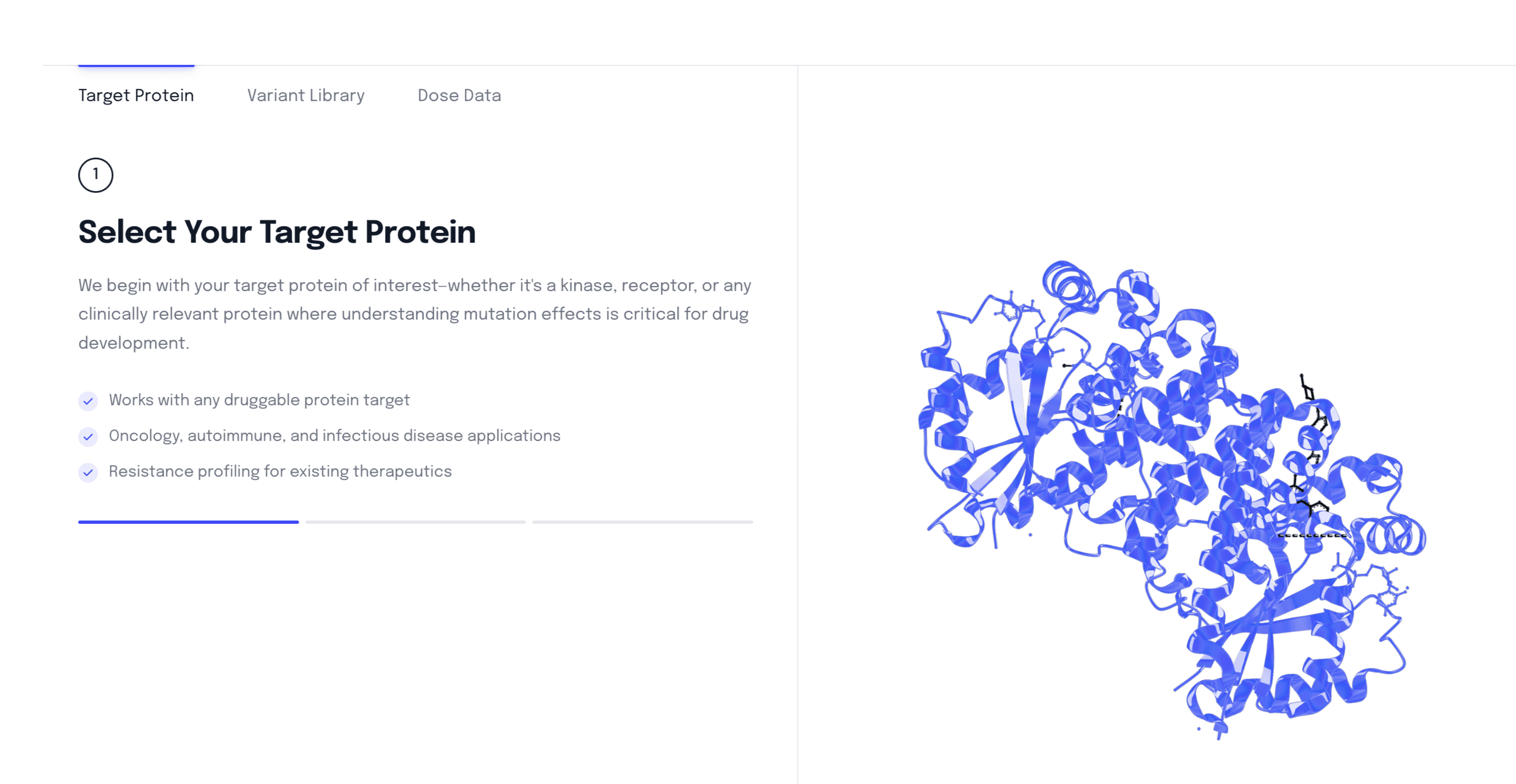
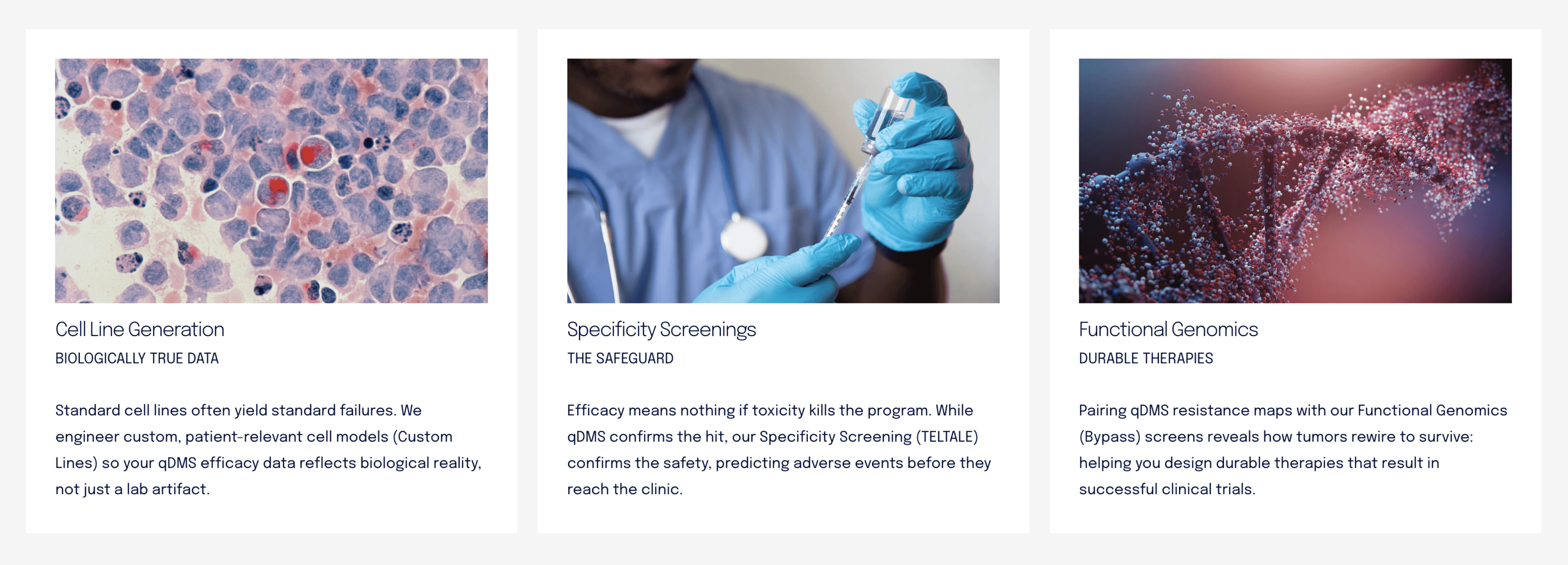
Beyond the hero, we broke the platform into discrete visual steps: mutation libraries, cell-based screening, dose-response modeling, pharmacology-calibrated predictions. Josh had already built a workflow graphic himself. We refined that instinct and wove it into the site’s narrative flow.

What Changed

Atlas now has a communication system, not just a website.

The narrative framework extends into investor meetings, partner conversations, and pitch materials. Instead of re-explaining from scratch, the team points to a clear story and builds from there.

The site is the visible output. The real shift is in how confidently the team presents the company at a critical inflection point.

Let's talk