Backstory: How Lived Experience Became Research
This project began with a personal spark: two of our Radian team members have children with type 1 diabetes. We’ve experienced the power and frustrations of today’s CGMs up close.
That led us to a broader study, including 12 in-depth interviews with patients spanning preteens to people in their 80s. Participants told us about life with diabetes and showed us exactly how they use their CGM apps (and related follow, watch, pump, and 3rd-party apps).
Covering Dexcom, Libre, Medtronic, and Eversense systems, these conversations gave us rich insights into the onboarding, alerts, reporting, and integrations experience of people using today’s CGMs.
The CGM Value Journey
To be successful, CGM systems must deliver on their value promise at each step:
Measure glucose levels accurately
Transmit the data seamlessly to where it’s needed
Transform it into clear insight for the patient (and caregivers)
Capture attention through an optimal sensory experience
Communicate the insight to support appropriate action
A failure at any step can lead to frustration and increase the risk of severe glycemic events.






A Hierarchy of Needs
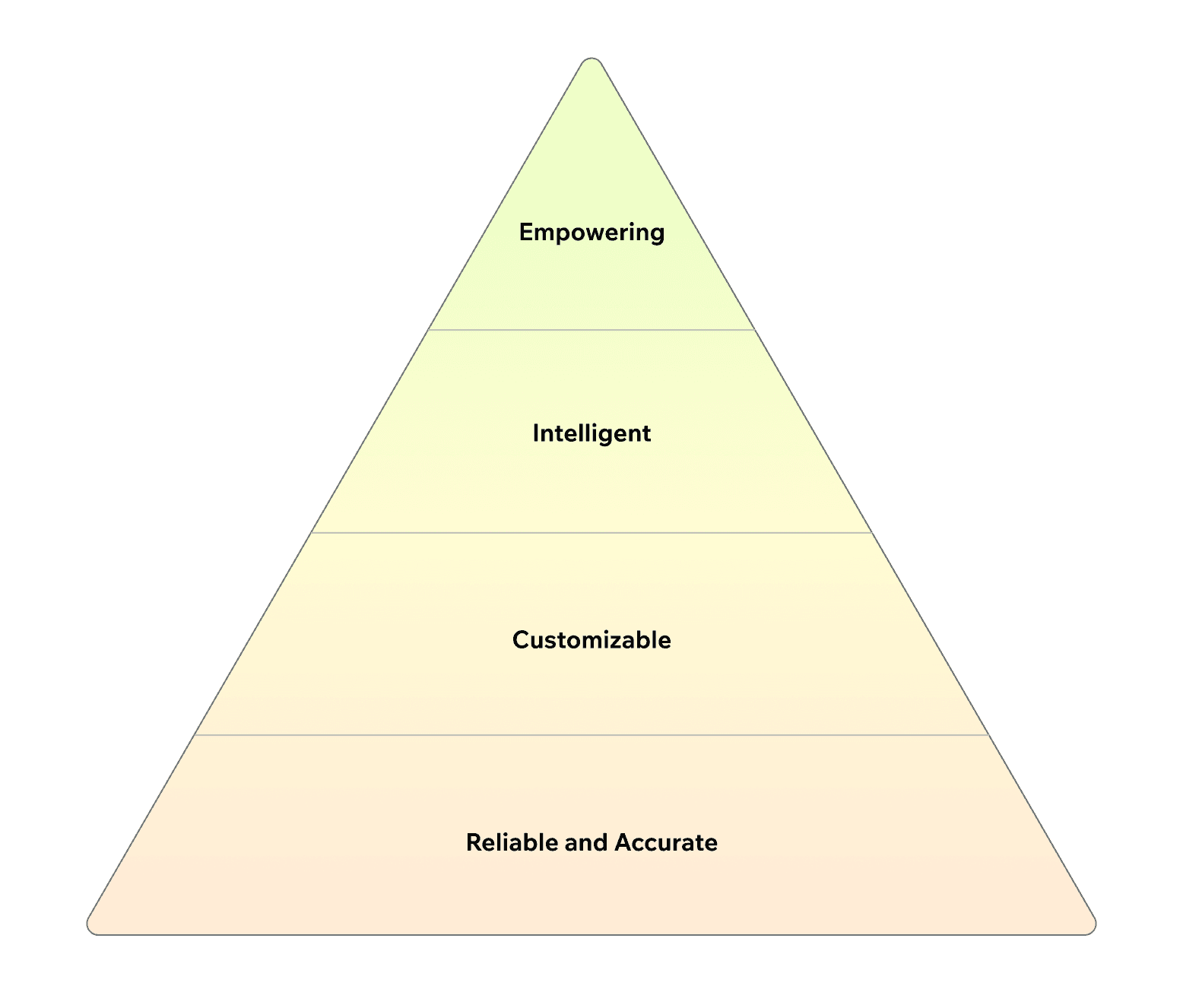
As we talked to patients and looked at the patterns of their experience and feedback, a clear hierarchy of needs emerged for CGM alert systems:
Reliable and Accurate. Consistent delivery of accurate reporting where it's needed.
Customizable. Granular control of alert sounds and haptics, context-specific profiles, and robust data portability.
Intelligent. Smart, predictive alerts and context-aware experience, handling edge cases with sophistication.
Empowering. Advanced pattern recognition with highly personalized insights, and adaptive, mastery-based guidance.
Few people we talked to were getting their needs at levels 1-2 met comprehensively. So, they often gave limited consideration to levels 3-4 and CGMs' newer features that attempt to serve these needs. They are stuck dealing with more foundational diabetes management concerns.
A Closer Look at the Pain Points
Let’s explore the two most common alert problem areas from our research.
Data Transmission
Problem: People often can’t get alerts where and when they really need them.
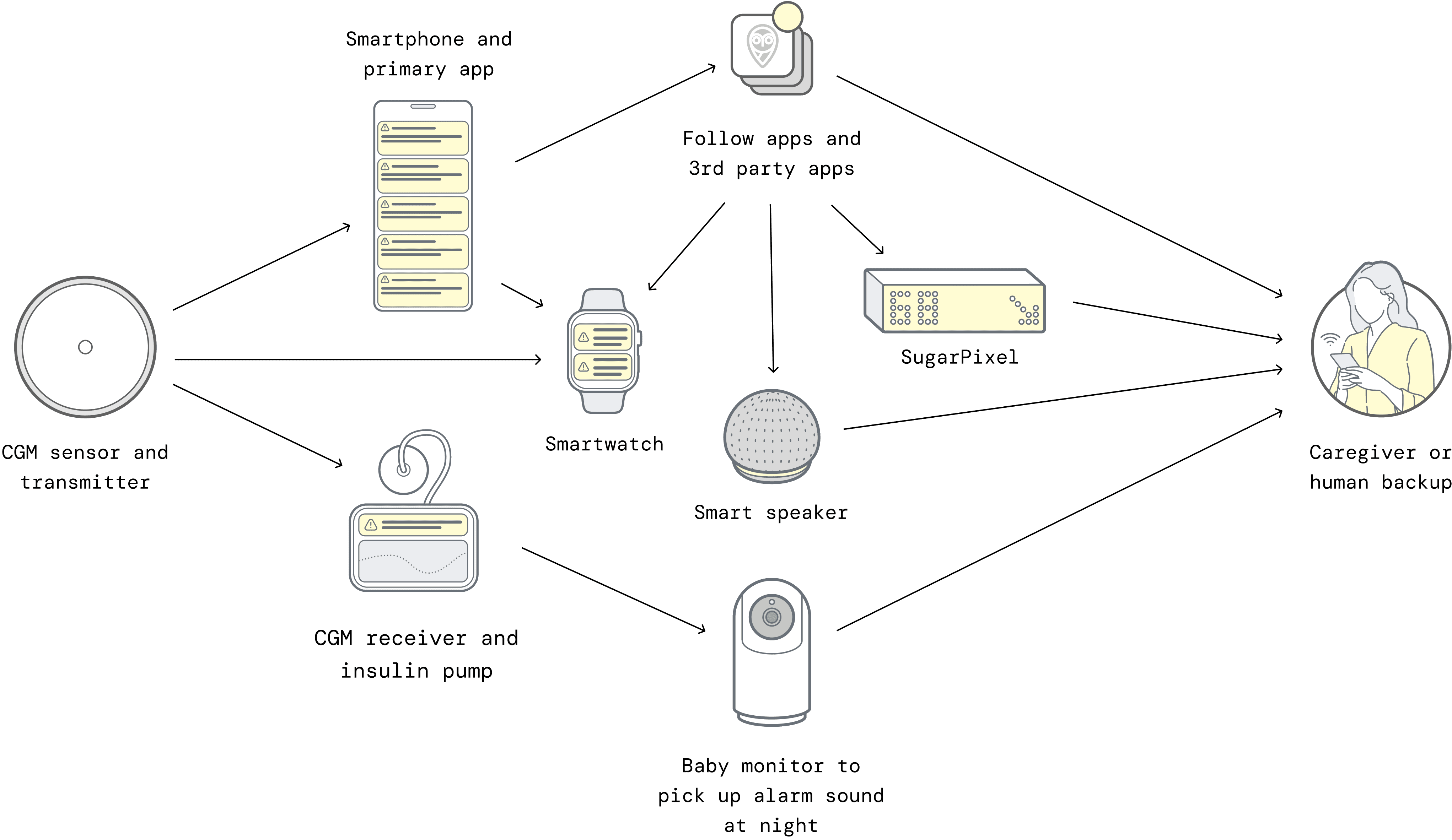
A smartwatch isn’t compatible at all, transmission to it isn’t reliable, or connectivity requires the presence of their smartphone as well.
A patient must have a smartphone to transmit data to a follow app, and even then, alerts aren’t in parity with the CGM app.
A third-party app with a preferred alert experience can’t access the data easily, timely, or at all.
A connectivity (wifi or cell reception) dependence for both devices for caregivers to receive alerts, and when connectivity isn’t available, “no data” alerts are unhelpful and lack good snoozing options.
Aggressive battery-life management can hurt alert reliability.
Impact: These challenges make it harder for people to get the alerts they need, when and where they need them. They leave patients uninformed in critical moments, create anxiety for caregivers, and restrict paths to improve insight and attention capture. A failure in transmission can break the value chain in multiple places.
Sensory Experience
Problem: Different people, in different contexts, need different sensory experiences for effective CGM alerts.
CGMs have limited or no context awareness. Alert settings must be manually changed for varying situations.
Audible alert settings are often the most configurable, but aren’t appropriate for every situation.
Haptics usually have little or no configurability (intensity and pattern in general and per alert type), undermining the potential to be the preferred sensory experience.
Escalation isn’t possible (a multi-step alert experience that demands more attention if ignored), often forcing a choice between sensory options that are too discrete or too disruptive.
Snoozing options are limited or nonexistent, leaving you with alert fatigue or missing reminders.
There can be complexity and confusion between app settings and device-wide settings (e.g. DnD).
Impact: These challenges put a stressful burden on patients caught between the fear of missing critical alerts and being disrupted by irritating, embarrassing, or painful alerts. The results include sleep disruption, anxiety, emotional and cognitive fatigue, less time in range, and ultimately, a greater risk of dangerous glycemic events.